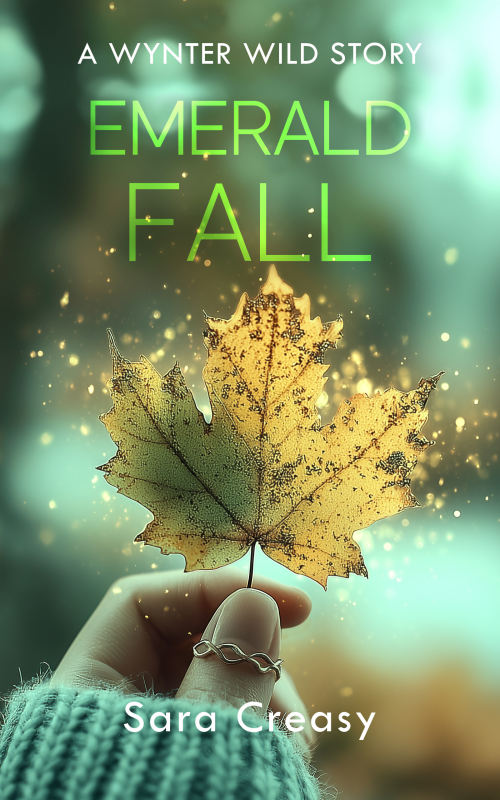
The next story in the Wynter Wild series is coming soon! Emerald Fall takes place during the months between Sometimes Love and Twelve Days of Jessemas.
To read excerpts, join my private Facebook group (where spoilers abound): Blue Bunker
Author of the Wynter Wild books
The next story in the Wynter Wild series is coming soon! Emerald Fall takes place during the months between Sometimes Love and Twelve Days of Jessemas.
To read excerpts, join my private Facebook group (where spoilers abound): Blue Bunker
I’ve published three books in the last couple of months – one sequel-prequel, one series-sequel, and one anthology. They’re all available as ebooks and in Kindle Unlimited. Audiobook is currently US only. Here’s the rundown and all the links:
…is the third short story in the Fairn Boys series, which follows Wynter’s brothers when they were little (15 years before they met her).
For 12-year-old Caleb, structure is survival. Home life is ruled by his volatile father, Harry, whose drinking fuels unpredictable violence and bouts of emotional cruelty against his three sons. Amid the chaos, Caleb struggles to maintain his identity and integrity while keeping his brothers safe.
Harry’s plans for a glorious Halloween bonfire could be the highlight of the year. But as the pyre rises, so does the threat to everything the brothers hold dear.
…is a novella sequel to the Wynter Wild series, directly following #11 Echoes.
Sometimes love… isn’t love at all
Wynter has flown halfway around the world care for the sister she barely knows. Seven-year-old Asha is hungry for connection, and Wynter throws herself into a crash course on becoming a dependable guardian to this sweet little girl who still believes in fairies.
But Asha’s fantasies aren’t as harmless as they seem. Her stories don’t line up. She’s keeping secrets. She’s telling lies. Wynter’s growing unease might be paranoia… or it might signal real danger.
With her brothers an ocean away, Wynter must rely on instinct alone. To keep Asha safe, she’ll have to trust the one person she swore she never would… and walk into the kind of trouble she’s spent her life avoiding.
…is an anthology of the three Fairn Boys stories, in paperback for the first time.
Caleb, Indio, and Jesse’s mom left the boys at their estranged father’s home… and never came back.
Living with dad is hard. Caleb grows up too fast as he attempts to take charge, Indio struggles with guilt and resentment, while little Jesse is in danger of losing his natural optimism.
Summer… Christmas… Halloween: three seasons for three brothers clinging to hope.
When I started writing the Wynter Wild books in 2017, a stream-of-consciousness half-a-million-word jumble of ideas and scenes covering several years of Wynter’s life, and written out of order, I knew early on that it would be a long series. So the necessity of naming the books in some sort of coherent manner was an issue I dealt with early on.
I wanted titles that played on a single theme, but I hadn’t decided what that theme would be. I jotted down endless ideas using themes from the story – not only music, but also “threads” (a recurring theme relating to broken or frayed threads, and of course braiding of hair and bracelets), lines from classic folk songs, matching words relating to family, and more.
Having decided on music, I brainstormed phrases and then matched them up with the relevant books. The later titles weren’t finalized until the earlier ones were already published, since those plots weren’t fully developed yet, but I had a list to select from.
Here’s my reasoning for each title – and a trip down memory lane for those readers who have stuck with the series to the end. Book title links take you to pages on the Wynter Wild Wiki, which includes spoilers.
Read more: Naming a very long seriesNot strictly a generic musical title – it just came to me at some point, and I made it even more relevant by having Wynter choose “littlesistersong” as her online ID. The title conveys music, and more importantly family, and reflects the idea of Wynter telling her story, or singing her song.
This book starts six weeks after Wynter escaped the ashram, when she’s settling in to life outside. But nothing is easy, and she feels out of phase with reality much of the time, unable to connect with school friends or her foster mother, and unable to live with her family where she yearns to be. Hence, she feels out of tune with the orchestra of life on the outside.

In this book (which incidentally covers the longest time span – about 7 months), Wynter is in a vaguely suitable foster home and seeing more of her family, so she’s feeling pretty positive – hitting her stride, finding her rhythm, as indicated by the title. She makes some proactive decisions as she looks forward to living with Caleb – including arguably devious steps to secure the purchase of their new home.
The title refers to the disappearance of two people who are or were important in Wynter’s life – Indio goes to London, and she learns about another disappearance in her past. The secret habit she forms, a reflection of her mental health, is her attempt to retrieve those lost moments.
Distorted family relationships are a key theme in this book. Miriam reappears, bringing into focus the damage she did to her children, including her indirect responsibility for Indio’s messed-up feelings. Incidents from Wynter’s past emerge (such as her damaged voice) to show how her early experiences distorted her life.
On the surface things are going well for the family as their band’s career takes off and their gigs are a success, thanks to the natural chemistry between them as musicians. Meanwhile, what Wynter perceives as a natural connection to Indio is interpreted very differently by his girlfriend. (For the non-musicians, harmonics are the ethereal flute-like overtones produced when a string vibrates along its full length as well as in fractions of its length. On the guitar you can produce a harmonic by lightly fretting the string at the 5th, 7th, or 12th fret.)
This title refers of course to the alternating viewpoints between the family in Washington, and Xay in California – as well as the “duet” of the childhood friends, Xay and Wynter, on their path toward reconnecting.
Events that should be exciting and joyful, such as Xay meeting the family and the band going on their first tour, are marred by tragedy and other circumstances, throwing a bittersweet cast over everything.
This refers to Wynter’s “broken” vocal cords requiring surgery, followed by mutism – an emotional reaction to the drama around her. Family strings, or connections, both at home (with Caleb’s downfall) and in other branches of the family, are tested or broken.
I chose this rather generic title as a way to round off the series (when I intended this to be the final book), to give the impression of the family’s stories continuing beyond what happens in the series. I tied up some loose ends while leaving other storylines open to possibilities for readers to imagine. The series only covers three years, and Wynter is only 18 – she has her whole life ahead of her!
After deciding to write the Australian tour, I had to pick a character to torture – and it made sense to choose Xay, as he’s the one returning home. Echoes from the past are inevitable. He goes through a tumultuous emotional journey and the echoes become overwhelming.

Finally, a quick word about the series title. Before I’d thought up any book titles, I knew I’d name the series after the main character because, regardless of all the sub-plots, it’s her story. So I figured I should give her a simple but memorable name.
Her name was originally a common “hippie” name, Summer, but that seemed too on-the-nose since she grew up in the desert. So I rather arbitrarily switched to Wynter (and gave Joy a valid reason for naming her that – she missed the winters of her early childhood).
I searched for an alliterative second name, and “Wild” sounded good to my ear. Her upbringing was rather wild, in a sense, and once we learn about her mother’s past, it makes sense why Miriam was attracted to the name.
Following the end of book 11, Wynter may be seriously considering changing her second name…
If you’re new to Wynter Wild’s world, here are a few things to do and read about the series:
Wynter goes from runaway to rockstar – that’s only half the story, but it’s the fun half! Listen to the songs she and her brothers and Xay have recorded (debut album Bloodlines on streaming and music platforms):
Watch and listen to all the lyric videos on YouTube:
Download the free Song Book (lyrics are also in the books):
Maps to orientate you in Wynter’s world:
The Wynter Wild series is available in ebook, Kindle Unlimited, audiobook, and paperback. Start with Little Sister Song. Click to reach your local Amazon store (English language):
FREE short stories when you sign up to my newsletter WildWord:
The entire series is also available in French and German (ebook, Kindle Unlimited, paperback):
Une histoire gratuite quand tu t’inscris à ma newsletter WildWord: En attendant elle
Eine kostenlose Story, wenn du dich für meinen Newsletter WildWord anmeldest: Warten auf sie
Book trailer and shorts for Little Sister Song:
Bonus material for the series (57 pages) in my store:
Follow my Facebook page for regular posts and to meet other readers:
This is the third in my Doorways series, looking at homes and locations mentioned in the Wynter Wild series. See also:
The family moves to a ramshackle farmhouse on Tiger Mountain after Caleb gets custody of Wynter. The house has a modern extension out the back and the famous stone tower. Other than the first two images here, the rest are AI-generated images of various rooms in the house to give you an idea of what it might be like to live there. There are some spoilers here.
Continue reading “Doorways Part 3: Tiger Mountain House”In my previous post I showed pictures of the various homes lived in by the family in the Wynter Wild series. In this post I’ll take a look at the two houses they visit for nostalgia’s sake in Montana, along with the Montana homes the children grew up in even before then. These homes are presented in reverse order (most recent first) and are AI generated.
Continue reading “Doorways: Wynter Wild Houses Part 2: Childhood”While writing the Wynter Wild series I would often “drive” through cities and suburbs on Google Maps to get a feel for how a place looks, even if those descriptions don’t end up in my writing. I live in suburban Melbourne, which has many suburbs with their own distinctive and very Australian flavor. So it’s fascinating to me to compare American locations with Australian, as well as with each other. I looked for houses the right size and price (using Zillow estimates for the year in question, where possible), and in the right location. This helped me enormously in visualizing my scenes. Zillow also sometimes has photos of the interiors (when they’ve recently been on the market).
I’ve used AI to recreate the houses that Wynter and her brothers have lived in, based on my research of real locations. Here they are, listed in the order they appear in the books, not the order they were lived in. (This post is an update of an earlier post where I used photos of real houses.)
Continue reading “Doorways: Wynter Wild Houses Part 1: Locations”
People can only give what they can bear
And sometimes it’s not enough to share
Her head swam sluggishly, euphoria battling with nausea. Until she floated gently to the ground, she hadn’t realized she couldn’t feel… anything. At last the hard ground pressed against her hip, her shoulder, her cheekbone. She was curled up tight in a ball.
She tried to reach out an arm but the leaden limb refused to cooperate.
She tried to stretch out a leg. An avalanche of items rained down around her, bouncing off her bones with dull thuds. Her eyes jolted open. A slit of light illuminated a string mop, a dustpan, and the curved handle of an old-fashioned vacuum cleaner.
Inch by inch, her fingers scrabbled along the floorboards to push the junk out of the way. There was nowhere for it to go. The walls closed in.
Someone had shoved her in here. A few seconds ago? A few minutes? An hour? A day?
Continue reading “Sometimes Love: sneak peek”
You may have noticed yet another spiffy cover change for the Wynter Wild series. I’ve been experimenting with different styles, with these rustic floral designs being the latest. I launched them at the start of March and saw an instant increase in readership – which leads me to conclude they’re more appealing than previous iterations. So, I think they’ll be hanging around for a while.
A downside of self-publishing is the lack of a marketing team’s expertise to make your cover the best possible design to attract suitable readers. An upside of self-publishing is that it’s easy to change the cover around and experiment!
For the new Wynter Wild covers, each design relates in some way, small or large, to the book’s contents or themes.
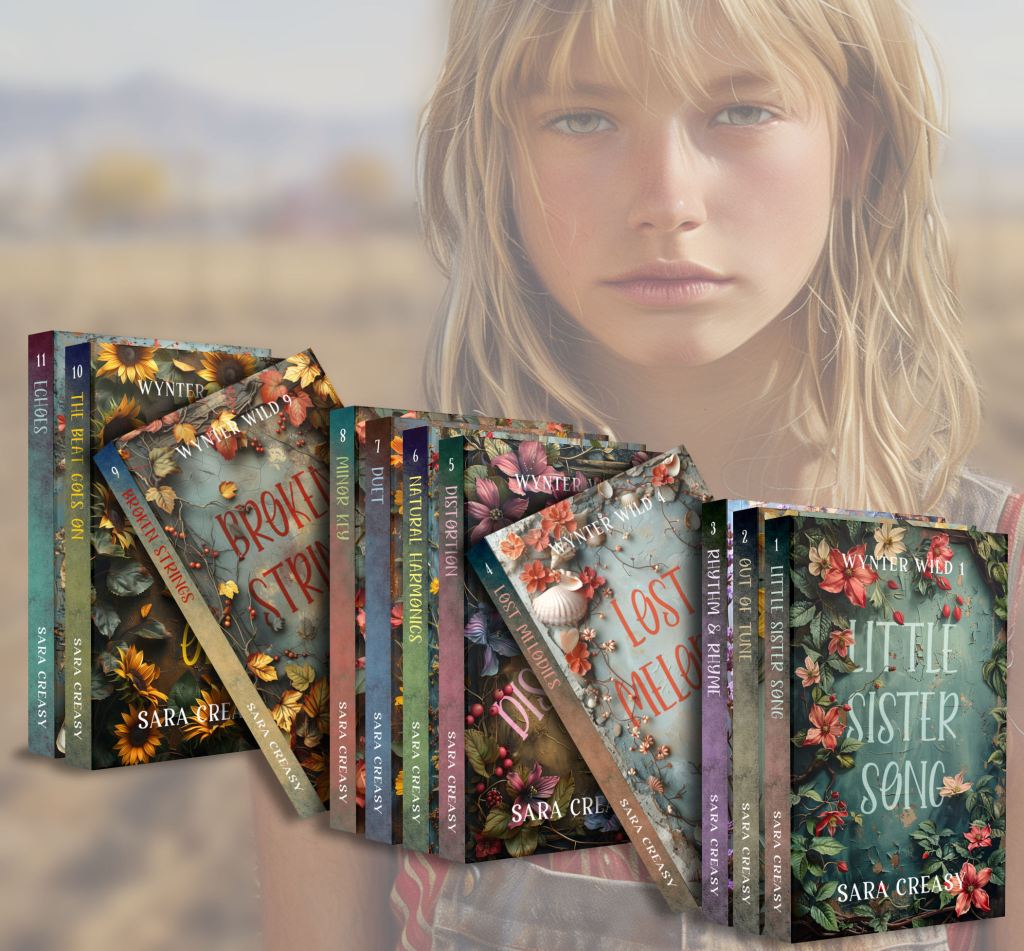
#1 Little Sister Song has a selection of Pacific Northwest natives
#2 Out of Tune has daffodils for the “Wordsworthesque” poem Wynter is writing
#3 Rhythm and Rhyme represents the lavender farm Wynter and Indio visit on his birthday
#4 Lost Melodies has shells for beach Wynter visits at the end
#5 Distortion has belladonna or deadly nightshade to represent bad mothering and twisted love
#6 Natural Harmonics features herbs from Wynter’s gardening efforts
#7 Duet has Arizona natives as a throwback to Wynter and Xay’s childhoods
#8 Minor Key has petals for a death in the family.
#9 Broken Strings has dying autumn leaves as it takes place during that season
#10 The Beat Goes On features sunflowers, a recurring theme in the book
#11 Echoes is an Aussie beach to represent Australia, where the story takes place
Visit my Books page to see all the covers.
I included content (trigger) warnings on the Amazon pages of my Wynter Wild books when I published them. I’ve now added a website page that lists them more extensively, linked from the top of the “Books” page.
Click here to read them.
Note that I’ve included everything I could think of using a lengthy list I found online, but not all warnings apply to all books in the series. It’s also worth noting that some of these issues are referenced (for example, as past events) but aren’t “on the page” as such, and that overall I don’t consider the books to be explicit when it comes to sex or violence.

 Sara Creasy